Hiring Bad Cops
SNA (Galesburg) — At the outset of his second term, US President Donald Trump shut down a database designed to provide law enforcement agencies with information on the past records of job candidates. The database aimed to prevent officers with troubling records from moving between agencies undetected, thereby protecting public welfare.
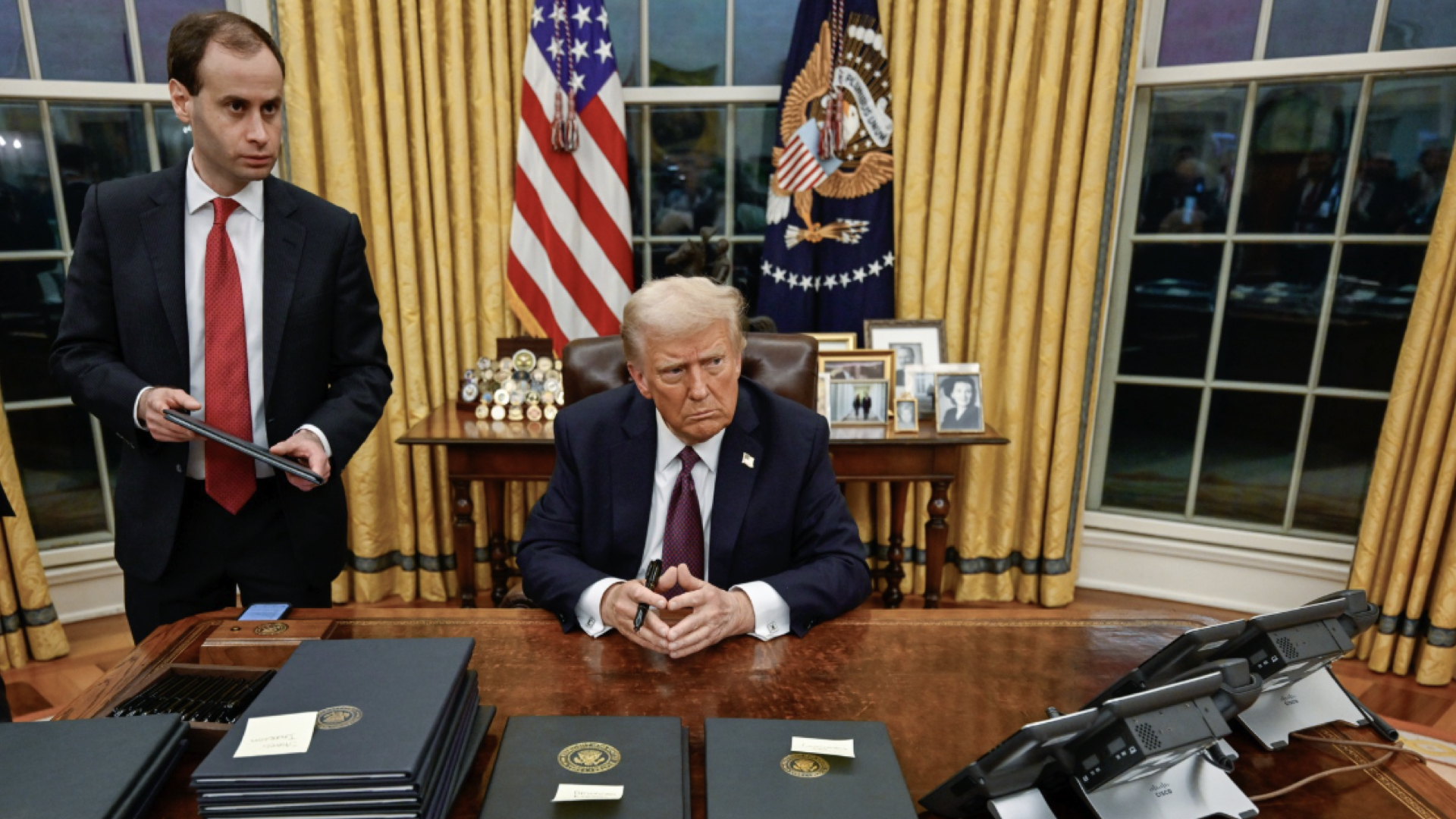
On January 20, 2025, Trump revoked a series of what his administration called “harmful executive orders and actions,” including Executive Order 14074, “Advancing Effective, Accountable Policing and Criminal Justice Practices to Enhance Public Trust and Public Safety,” issued by President Joe Biden in May 2022. This had been the basis for the later establishment of the National Law Enforcement Accountability Database in December 2023.
Trump’s executive order explained: “The previous administration has embedded deeply unpopular, inflationary, illegal, and radical practices within every agency and office of the federal government. The injection of ‘diversity, equity, and inclusion’ (DEI) into our institutions has corrupted them by replacing hard work, merit, and equality with a divisive and dangerous preferential hierarchy. Orders to open the borders have endangered the American people and dissolved federal, state, and local resources that should be used to benefit the American people. Climate extremism has exploded inflation and overburdened businesses with regulation.”
Trump’s elimination of the National Law Enforcement Accountability Database did not appear to fall into any of these categories as he rescinded 78 Biden-era actions. In fact, the initiative for its creation had come from an executive order Trump himself had issued during his first term in June 2020. His earlier executive order had called for the creation of “a database to coordinate the sharing of information between and among federal, state, local, tribal, and territorial law enforcement agencies concerning instances of excessive use of force related to law enforcement matters, accounting for applicable privacy and due process rights.”
Shutting down the National Law Enforcement Accountability Database, which had been accessible only to law enforcement agencies, has not been explicitly defended by the administration or its allies, and has been met with puzzlement.
“Mechanisms for police accountability are critical,” Jillian Snider wrote in an analysis for R Street, a Washington DC thinktank dedicated to free markets and limited government. “Dedicated law enforcement officers do not want to work alongside ‘bad apples’ who tarnish the reputation of the profession. Despite the importance of such accountability measures, the public has not received a clear explanation for [the National Law Enforcement Accountability Database’s] termination, leaving officers and communities questioning the decision.”
Delia Addo-Yobo, US Senior Staff Attorney at Robert F. Kennedy Human Rights, added, “Without a centralized database of federal records, hiring agencies have no easy way to tell if their law enforcement candidates have a history of past misconduct. Dismantling the [National Law Enforcement Accountability Database] enables problematic officers to jump from job to job, creating a culture of impunity and a greater risk of law enforcement overreach and abuse.”
There had been no prior call from Republicans or conservatives to eliminate the database. Allowing law enforcement agencies to effectively track problematic officer candidates had appeared to be a consensus issue.
The only significant criticism had come from the National Association of Police Organizations, a lobbying group, which called for greater due process before the actions of individual officers were listed in the database. It recommended that “only serious criminal convictions, permanent suspension of enforcement authorities, and decertification be included in the database.” In principle, it did not oppose its existence.
No major institution or political commentator, including the National Association of Police Organizations, appears to have publicly welcomed the termination of the National Law Enforcement Accountability Database. This raises the question of whether Biden’s May 2022 executive order was given much thought when it was revoked alongside 77 other actions on the first day of Trump’s return to office.
However, National Association of Criminal Defense Lawyers Executive Director Lisa Wayne argued in a statement that, “By shielding these police officers from the public, the Trump administration has given a nod of approval to police misconduct within our law enforcement ranks.”
While it operated, the database had been limited to records from the ninety federal law enforcement agencies, which employ about 150,000 officers. It was unclear whether the database would be expanded to cover the “state, local, tribal, and territorial law enforcement agencies” mentioned in Trump’s original June 2020 executive order.
Become a Shingetsu News supporter on Patreon.