Japan’s Woeful Record on Gender Equality
Then-Prime Minister Junichiro Koizumi set a goal of having women occupy 30% of leadership positions by 2020, but Japan will come nowhere close.

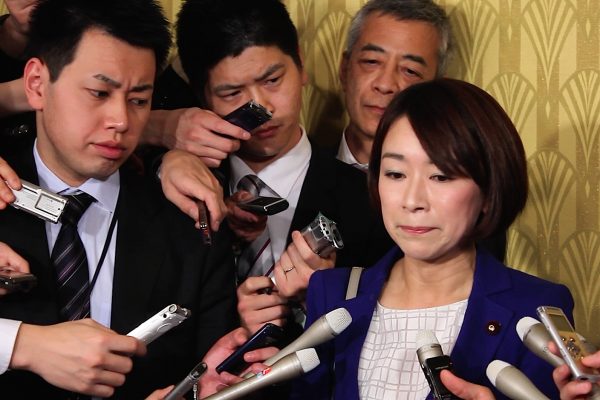
Then-Prime Minister Junichiro Koizumi set a goal of having women occupy 30% of leadership positions by 2020, but Japan will come nowhere close.

Host Michael Penn interviews Rob Fahey about the prospects for and the challenges ahead of the Japanese opposition parties, led by the Democratic Party.

A recent attempt by the Liberal Democratic Party to brand the Japan Communist Party as violent has sparked a new debate on the political history of Japan, but it seems to be primarily a cynical political ploy.

The crackdown on yakuza, including the group called the Kudokai, which is registered as an especially dangerous criminal gang under Japanese law, has recently reached abnormal levels. However, the fact that the Kudokai is also an organization reported to have once had connections with Shinzo Abe before he became prime minister eludes most people.

Uniformed Self-Defense Forces officers are currently demanding a larger role in setting military policies, which will for the first time utilize the security legislation forced through the Diet by the ruling coalition last September. Civilian defense bureaucrats have so far rejected the demands of the uniformed officers, fearing that acquiescing will decisively tilt the power balance between the two sides within the ministry.
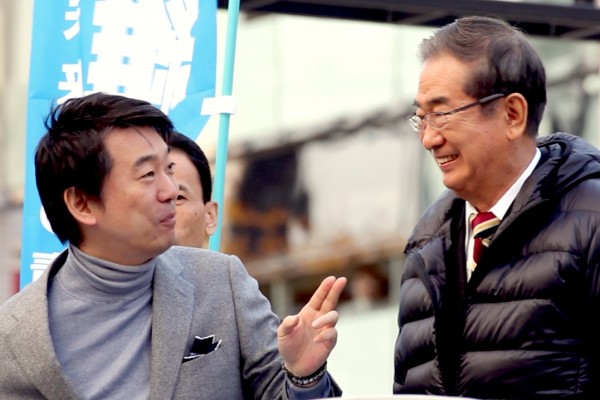
Osaka Mayor Toru Hashimoto was still near the peak of his popularity when he announced in September 2012 that he would be moving into national politics. Simply by putting out the call, enough lawmakers gathered to his banner to establish a new political party meant to represent the Osaka Restoration Association’s interests at the national level. Today, in an echo from three years ago, Osaka Mayor Toru Hashimoto is once again signalling his intention to launch a new political party meant to represent the Osaka Restoration Association’s interests at the national level.

Lower House member Takaya Muto tweeted on July 30 that the arguments of students protesting against the security bills “are based on the selfish and extremely egoistic thought of not wanting to go to war.” Since then, his tweet has gone viral in Japan: It was retweeted more than 6500 times and has sparked outrage in the media.

Once again today Prime Minister Shinzo Abe has declared it. As the House of Councillors begins its deliberations on the Legislation for Peace and Security, the people are told that the passage of these bills is necessary and must be done now—in this Diet session. There is no alternative. Japan’s national security is now under threat like no other time in the postwar period.

While hardly a revelation, a recent series of comments from senior Liberal Democratic Party officials has provided an usually clear example of the ruling party’s cynicism in terms of its approach to academic specialists. It began with what might be called the “Own Goal Incident” that occurred on June 8 in the House of Representatives.
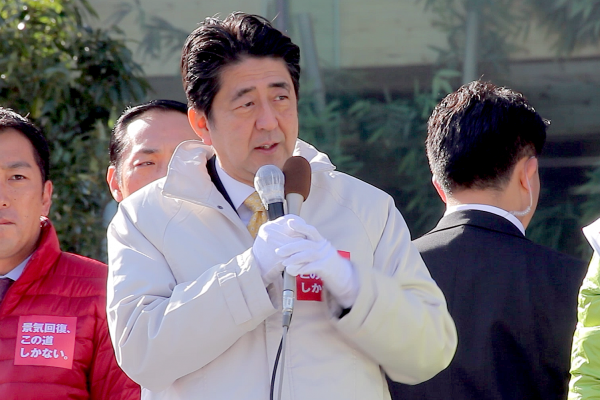
Today Prime Minister Shinzo Abe will form his third cabinet since his December 2012 return to power. It will look an awful lot like the second cabinet, the only difference being that underperforming Defense Minister Akinori Eto will be dropped in favor of veteran hand Gen Nakatani.