Visible Minorities: Japan’s Rightward Swing is Overblown
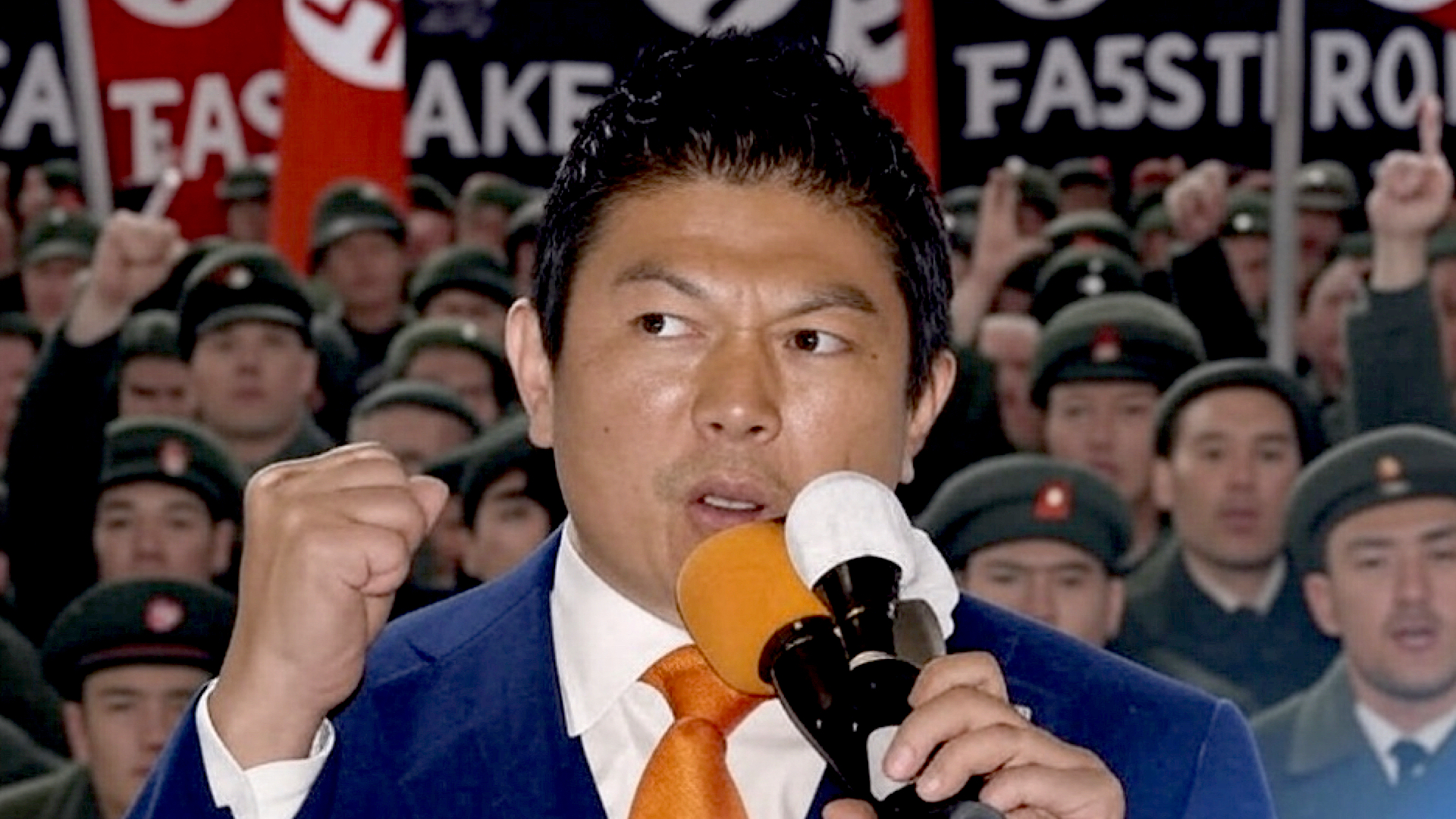
Yes, there is a new far-right party in Japan. But at this point, the media hype about Sanseito is sensationalism, as what it’s offering is neither new nor well-planned.
SNA (Tokyo) — By the time I completed my column last month, Japan had held its July 20, 2025, Upper House elections. They deserve comment in this space, but not for the reasons you might expect.
The major takeaway was that the ruling conservative parties (Liberal Democratic Party and Komeito) lost seats, while opposition parties on the right, left, and center generally gained. Notably, for the first time since the LDP was founded in 1955, the party lost its ruling majority in both the Upper and Lower Houses of the National Diet. This meant they had to expand their coalition to stay in power, which they did—Prime Minister Shigeru Ishiba remained in office.
So, my take is that we’ll have to wait and see whether Japan’s parliamentary system will become as fragile as, say, postwar Italy’s, with frequent elections (until recently) as coalitions fail. My read is pretty milquetoast. But that’s not what the media shouted about.
Sanseito as the Next Big Political Movement?
The headlines were dominated by the rise of a new far-right party called Sanseito, a “burgeoning” “election force” that “won big” and became “the talk of the town.” Sanseito openly trumpeted Trump-like themes, campaigning on a Japan First strategy, singling out foreigners as the cause of Japan’s woes, and promising xenophobic policies to disenfranchise, penalize, limit, or even expel non-Japanese. Their core stance is that foreign residents aren’t real members of Japanese society—even if they naturalize—and should never have equal access to taxpayer-funded services or constitutional guarantees.
One might expect me to “do a Debito” here, sounding the alarm about a new fascist era in Japan. But I’m going to argue the froth is overblown. I won’t tell people to ignore Sanseito, but this election is more a case study in media hype than a definitive political shift. Sanseito is saying nothing new and still lacks real power.
Sanseito Gained Seats, But…
First, let’s put things in perspective. Sanseito now holds 15 seats in the Upper House, up from a single seat before the election. It did punch above its weight in terms of total votes from constituencies and proportional representation. But that’s the strongest case for a new rightward swing in Japan.
In a chamber of 248 seats, Sanseito occupies just six percent. It remains only the sixth-largest party in the Upper House, far from power-broker or swing-voter status. For example, they can’t submit budget bills involving public spending until they reach 20 seats.
Second, the Upper House is the less powerful of Japan’s two chambers. In my experience, the Lower House is where serious politicians reside, engaging in tugs-of-war with the ministerial mandarins who are Japan’s real policymakers. The Upper House, however, is often a playground for celebrity candidates, larkers, clowns, and dilettantes who rubber-stamp Lower House decisions.
This places Sanseito right where they belong—in the clown-car fringe-party zone that every developed parliamentary system offers for venting voters.
Sanseito Is Not Saying Anything New
Sanseito has made outlandish (and outright false) claims about foreigners in Japan, spreading hateful, overt, and unabashed propaganda. If in power, they would likely relish targeting anyone who doesn’t fit their definition of true Japanese (ideologically or otherwise). They aren’t just authoritarians seeking domination by any means necessary—they are fascists, infusing their populism with racist and ethnocentric ideologies, and they would dismantle democracy with a smile.
But having written about Japan’s politicians for decades, I can say that every racist statement from Sanseito has been echoed by other parties and candidates, both in election slogans and in office. Bigotry has long been intrinsic to LDP policy proposals (recall Nippon Kaigi’s influence at the highest levels of government), and it resonates with the fearful and ignorant.
Consider the blatant racism of former Tokyo Governor Shintaro Ishihara, who was re-elected for decades. Then factor in the decades of prejudicial performance art by prefectural representatives, city mayors, neighborhood associations, and local assemblies. Unlike Sanseito, these figures held real power to craft xenophobic policies—and they did. Add to that the regularized racial profiling and search-and-seizure powers (sometimes with deadly force) of the Japanese police, the unconstitutional yet legal “Japanese Only” signs at businesses, the unfettered racist landlords who make apartment hunting an ordeal for visible minorities, and the constant “We Japanese” exclusionary narratives in the media. This makes alienation the rule, not the exception, for Japan’s foreign residents, whether in political sloganeering or daily life.
In other words, the leap from Japanese Only to Japan First is negligible in both content and intent. Given that “Japanese Only” signs have been documented since 1992 and remain legal despite Japan signing an international treaty in 1996, Sanseito is arguably behind the curve by over thirty years. My point is that Sanseito offers nothing new.
What’s new is that the LDP is now seen as part of the problem by Japan’s reactionaries. It was the government’s idea to bring in foreign laborers and tourists to staff convenience stores and boost Japan’s economy. I’m not being sarcastic—this was a bright idea.
“Cool Japan” has been a resounding success. The Japanese economy now depends so heavily on foreign inflow that even the LDP has shifted its rhetoric, denouncing discrimination and prejudice (while tossing out right-wing chum to lure votes during the election). Clearly, that strategy failed.
Who’s More Worried About Sanseito? The Media
Sanseito’s rise isn’t unexpected. It’s what happens when voters feel their usual outlet for grievances has vanished—a protest vote. But it’s unclear if this signals a sustainable social movement, as many defunct Japanese parties can attest.
So why the big headlines? Because of the global far-right’s rise. America, the world’s flagship “arsenal of democracy,” is turning fascist. Journalists are thus asking whether Japan is the next domino in a line of xenophobic parties, like Hungary’s Orban, Italy’s Meloni, Britain’s Brexit, the Netherlands’ Wilders, France’s Le Pen, Germany’s AfD, or India’s Modi.
Yet, as argued, Japan’s politics have been ethnostatist for decades. The media now simply has a peg and a fringe party to hang their articles on. Sanseito still lacks the power to change anything. Yet.
When Should We Worry About Sanseito?
Scholars like Levitsky and Ziblatt, in their work on how democracies die, suggest we should fear political pendulum swings when the pendulum cannot swing back—when the opposition is systemically shut out of power forever. This happens when anti-democrats in office have concrete plans for domination, not just populist slogans.
For example, they legalize unconstitutional activities by targeting civil rights, “capture referees” by stacking judiciaries and politicizing the civil service, sideline rivals by portraying them as evil and unentitled to power, and dismantle institutions that check and balance fascist tendencies with the rule of law.
Sanseito is nowhere near that level of planning. They’ve scribbled out rewarmed prewar ideas about constitutional reforms and enforcing patriotism (again, LDP policies that didn’t previously cause alarm), alongside populist slogans about traditional family values, lowering taxes, excluding foreigners, and restoring the Emperor’s primacy.
Yes, this is worrisome and incompatible with modern democracy. But it’s far less developed than, say, the US Heritage Foundation’s 920-page “Project 2025.” Read it sometime to see how granular it is.
Even if Sanseito gained real power, they’d face Japan’s formidable bureaucracy, which has steered the country since its inception. It’s more siloed and impenetrable than the one Trump is dismantling. In Japan’s one-party state, Diet members don’t draft policy. Even cabinet ministers are expected to listen to their ministries but not touch the controls. You’d need a lot of pages in your “Project 2025” to tackle that.
The Next Steps: Birds of a Feather
What’s worrisome is that Sanseito gives the global far-right a relatable ally in Japan. Trump and Steve Bannon tried cozying up to their far-right hero, former Prime Minister Shinzo Abe, but got only so far. The LDP, the most successful political party in any liberal democracy, is as institutionalized as Japan’s mandarins at maintaining the status quo.
But the next steps are underway. The US Republican Party adopted Hungary’s Orban’s tactics for consolidating control, and global far-right representatives have already met with Sanseito, offering their playbook. One could argue Japan is more susceptible to fascism’s appeal. The latent bigotry of “Japan First” easily sells to a public that intuitively believes it.
These are the warning signs. But we’re not there yet. Even the LDP is talking with the left-leaning Constitutional Democratic Party to preserve ideological centrism, a strategy other imperiled democracies have used to ward off authoritarians.
Conclusion: Wait and See
That’s why the alarmist headlines about last month’s elections are premature. It will take a few more elections to gauge Sanseito’s staying power. After all, it took Trump’s operatives a decade to learn how to rig the system in their favor permanently.
Despite the global far-right’s playbook, the fear of fascism itself might serve as a cautionary tale (as seen in recent Canadian elections) for Japan to stave it off. Recall South Korea’s recent routing of a soft coup in mere weeks. Why? They’ve endured brutal authoritarianism before.
Japan, too, experienced fascism generations ago, which utterly destroyed the country. Historical amnesia is rising, but that basic fact hasn’t been forgotten. Sometimes societies need to endure autocracy to develop antibodies against it. It’s possible Trump is as much a vaccine as a plague.
But to return to my original point: Sanseito is still half-baked cosplay fascism. Belay the sensational headlines and see how this plays out. Only time will tell which side learns enough to seize or preserve power.
Become a Shingetsu News supporter on Patreon.